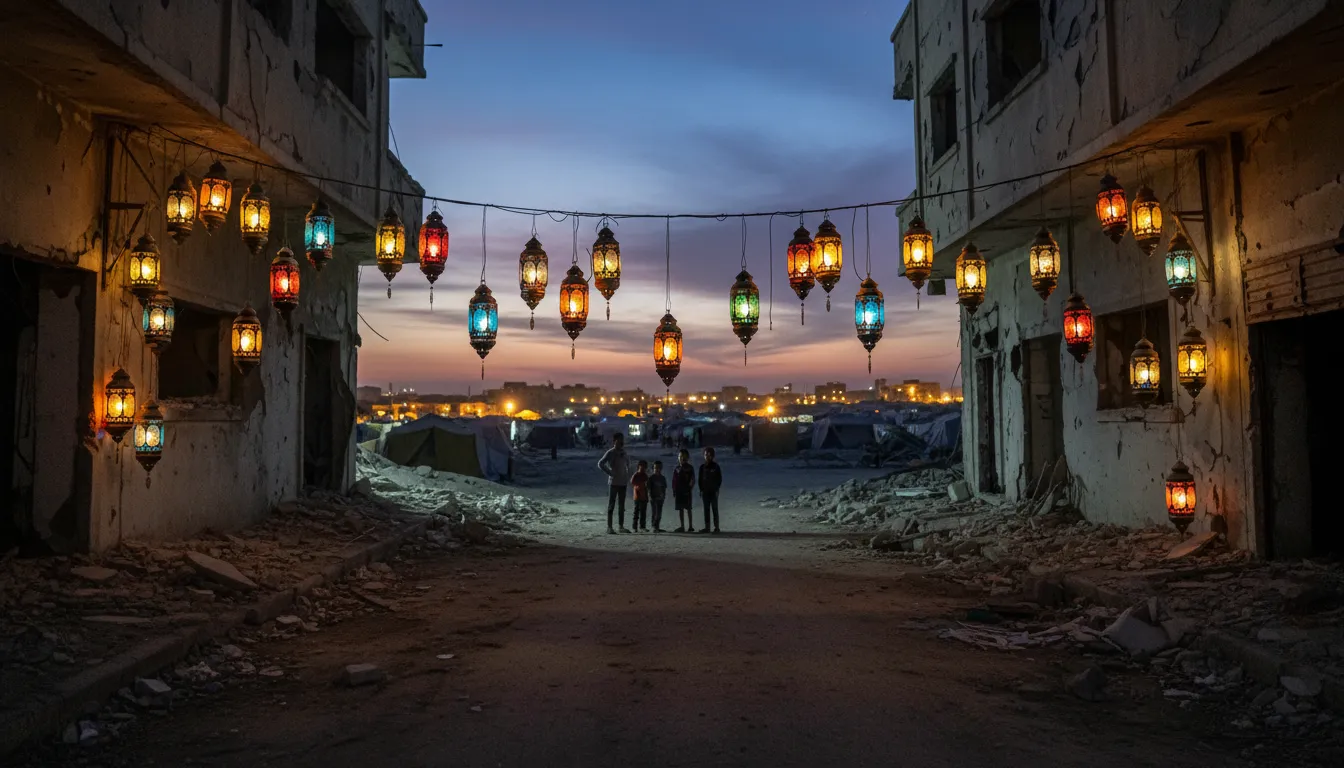
Gaza Ramazan 2026: First Holy Month After Ceasefire
Lanterns and string lights flicker against a backdrop of collapsed buildings as Gaza City marks its first Ramazan since the October ceasefire. For a population living among ruins, the holy month brings a fragile sense of peace and a bitter reminder of what was lost.
Key Highlights
- Worshippers returned to the damaged Omari mosque for the first fajr prayers.
- Lanterns and decorations appear in streets lined with rubble and destroyed homes.
- High prices and shortages make traditional iftar meals unaffordable for many.
- Over 2 million residents remain displaced, many living in tents across the strip.
Prayers Amidst the Ruins
In the historic Omari mosque, dozens of worshippers gathered for the first morning prayers of Ramazan. Despite the winter cold and the lack of a roof in several sections, residents stood on worn carpets to pray. Abu Adam, a local resident, stated that despite the destruction of mosques and homes, the community remains determined to worship. Security sources reported that while the ceasefire holds, artillery shelling was still heard in eastern Gaza City and central refugee camps early Wednesday.
Stifled Celebrations in Tents
In southern Gaza, tens of thousands remain in makeshift shelters. Nivin Ahmed, 50, described the atmosphere as ‘stifled joy.’ While the absence of active bombing is a relief, the loss of family members and the inability to host traditional iftar gatherings weighs heavily on the community. Families who once enjoyed lavish spreads now struggle to provide a single main dish due to skyrocketing costs.
Economic Scarcity and Aid
The battered economy and restricted entry of goods have left Gaza almost entirely dependent on humanitarian aid. United Nations reports indicate that supplies are not sufficient to lower market prices. Residents like Mohammed al-Madhoun expressed helplessness as children ask for festive lanterns and favorite foods that are now luxury items. Despite this, neighbors share what they have, attempting to create a picnic-like atmosphere for children in the tent camps.
Art and Resilience on the Coast
On the beaches of Deir el-Balah, Palestinian artist Yazeed Abu Jarad used the sand to welcome the month. His ornate Arabic calligraphy reading ‘Welcome Ramazan’ drew crowds of displaced children. This resilience is mirrored across the territory, where residents say the month is a time for empathy as everyone shares the common experience of displacement and rebuilding.
Nearly 2.2 million residents of Gaza have faced displacement since the conflict began in October 2023. A US-brokered ceasefire in October 2025 ended the most intense period of bombing, but the humanitarian situation remains dire.